
Thermal Oil Heaters
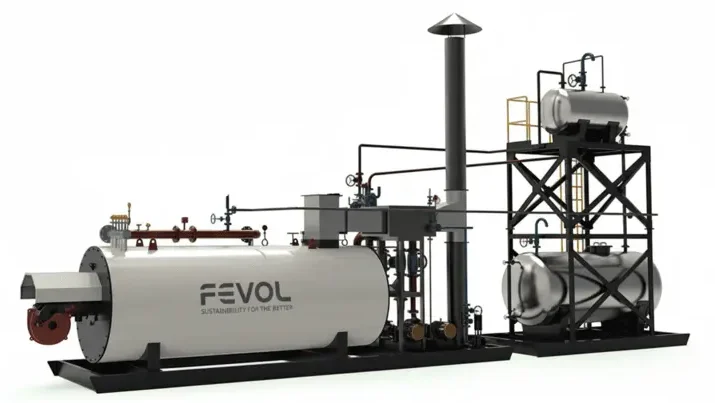
Unlocking High-Temperature Efficiency with Thermal Oil Heaters
In modern industrial manufacturing, achieving extreme high-temperature processing without managing dangerously high system pressures is a major operational advantage. Standard steam infrastructure requires heavy wall-thickness piping and intensive regulatory oversight when operating at elevated temperatures. At FEVOL, we engineering next-generation thermal oil heaters designed to deliver precise process heating up to 350°C while maintaining completely atmospheric or near-atmospheric pressures. This closed-loop thermodynamic layout drastically simplifies factory infrastructure while reducing overall structural risks.
Every processing facility relies on absolute thermal stability to maintain product quality and avoid manufacturing bottlenecks. Implementing our high-performance thermal oil heaters ensures uniform heat distribution across your entire production line. By utilizing advanced liquid-phase heat transfer, these systems eliminate common steam-related headaches like condensate flashing, freezing hazards, and internal pipe corrosion. This results in a highly reliable utility network that lowers your overhead from day one.
Advanced Engineering in Industrial Thermal Oil Heaters
We follows rigorous international benchmarks for pressure vessel and heat exchanger fabrication. To guarantee exceptional thermal stress distribution, all our production routines utilize precision-coiled tube configurations that optimize fluid velocity and prevent localized overheating of the heat transfer medium. Investing in premium industrial thermal oil heaters from FEVOL provides your plant with a durable, heavily insulated thermal system engineered for continuous heavy-duty operational cycles.
These robust setups feature advanced automated control configurations that monitor real-time flow velocities, exhaust stack temperatures, and differential pressures across the heater core. Maintaining optimal fluid velocity is absolutely critical to preventing thermal cracking and premature degradation of the organic or synthetic heat transfer oil. Our proactive engineering approach guarantees long-term fluid stability, keeping your machinery running at peak efficiency while extending the lifecycle of internal components.
Demystifying Thermal Fluid Heaters and Hot Oil Boilers
Within the industrial heating sector, professionals frequently use terms like thermal fluid heaters and hot oil boilers interchangeably. While they refer to the same core technology of utilizing organic or synthetic fluids for heat transfer, the exact fluid chemistry dictating your system layout matters immensely. Standard hot oil frameworks typically utilize refined mineral oils for intermediate temperature ranges, whereas heavy-duty thermal fluid designs utilize synthetic aromatics to safely cross the 300°C threshold without fluid breakdown.
We customize the internal coil geometry, pass configuration, and burner compatibility of our heating units to perfectly match your specific process fluid. Whether your facility utilizes mineral oils for cost-effective processing or advanced synthetic fluids for extreme thermal demands, our custom-built systems prevent film temperature spikes. This meticulous thermal tailoring ensures that your energy distribution remains safe, stable, and highly predictable.
Ready to Upgrade Your Thermal Infrastructure?
Implementing modern energy solutions requires deep engineering expertise, precise fluid dynamic modeling, and reliable fabrication quality. FEVOL provides comprehensive consulting, tailored thermal calculations, and end-to-end commissioning to ensure your new heating layout delivers immediate operational improvements. Contact our engineering desk today to consult with our technical team and find the ideal system configuration tailored to your specific industrial workflow.
Design
Thermal oil is heated via forced circulation within a coil or tube arrangement exposed to combustion gases generated by a burner. The system operates in a completely closed loop and atnear-atmospheric pressure to achieve high temperatures.
Applications
Indispensable for processes requiring high-temperature (typically 300 C – 400 C but low-pressure heat transfer. Widely used in the chemical, textile (stenter machines), food processing, asphalt production, wood (MDF/plywood presses), and petroleum industries.
Advantages
Achieves high temperatures without the substantial investmentcosts and heavy safety regulations required by high-pressure steam boilers.Corrosion and scaling risks within the system are minimal. Process temperature control is highly precise and stable.
High-Temperature Precision
Achieve process temperatures up to 400 ∘C while operating at near-atmospheric pressure, offering precise heat required for demanding industrial applications without regulatory overhead.
Enhanced Safety and Simplicity
Eliminate the explosion risks, high construction costs, and complex regulatory burdens associated with high-pressure steam systems, simplifying boiler house operation and staffing requirements.
Stable and Consistent Control
Utilize the unique thermal properties of the fluid todeliver exceptionally stable and consistenttemperature control, which is critical for ensuring product quality and process reliability in sensitive applications.
Maximum Asset Integrity
Since the system operates without water or steam, itcompletely eliminates the risks of internal corrosion,scaling, and freezing, significantly reducing long-term maintenance needs and extending the system’s lifespan.